1. Measure (Operational Carbon)
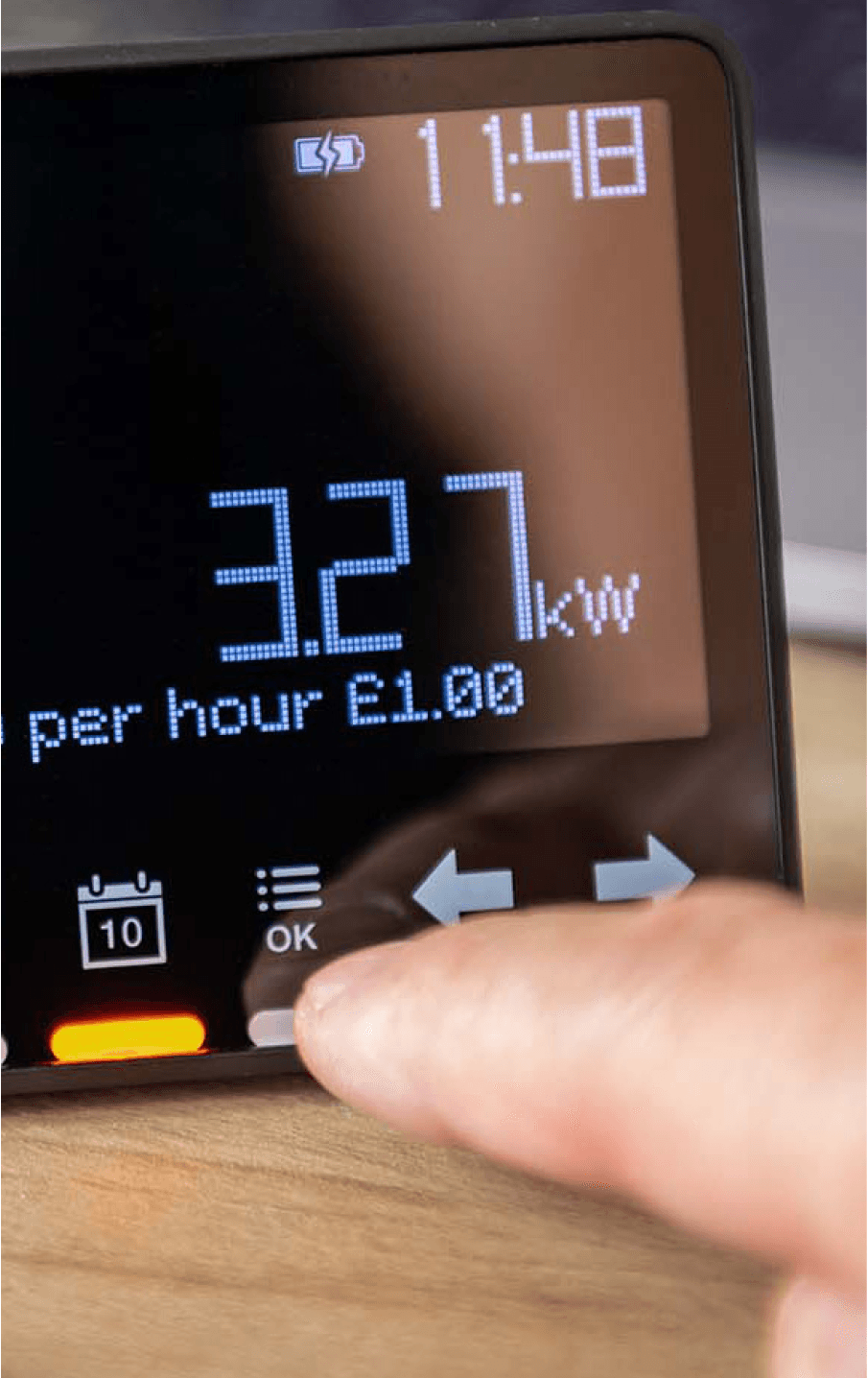
To calculate operational carbon emissions, we need to start by measuring all the energy consumed while the building is in use
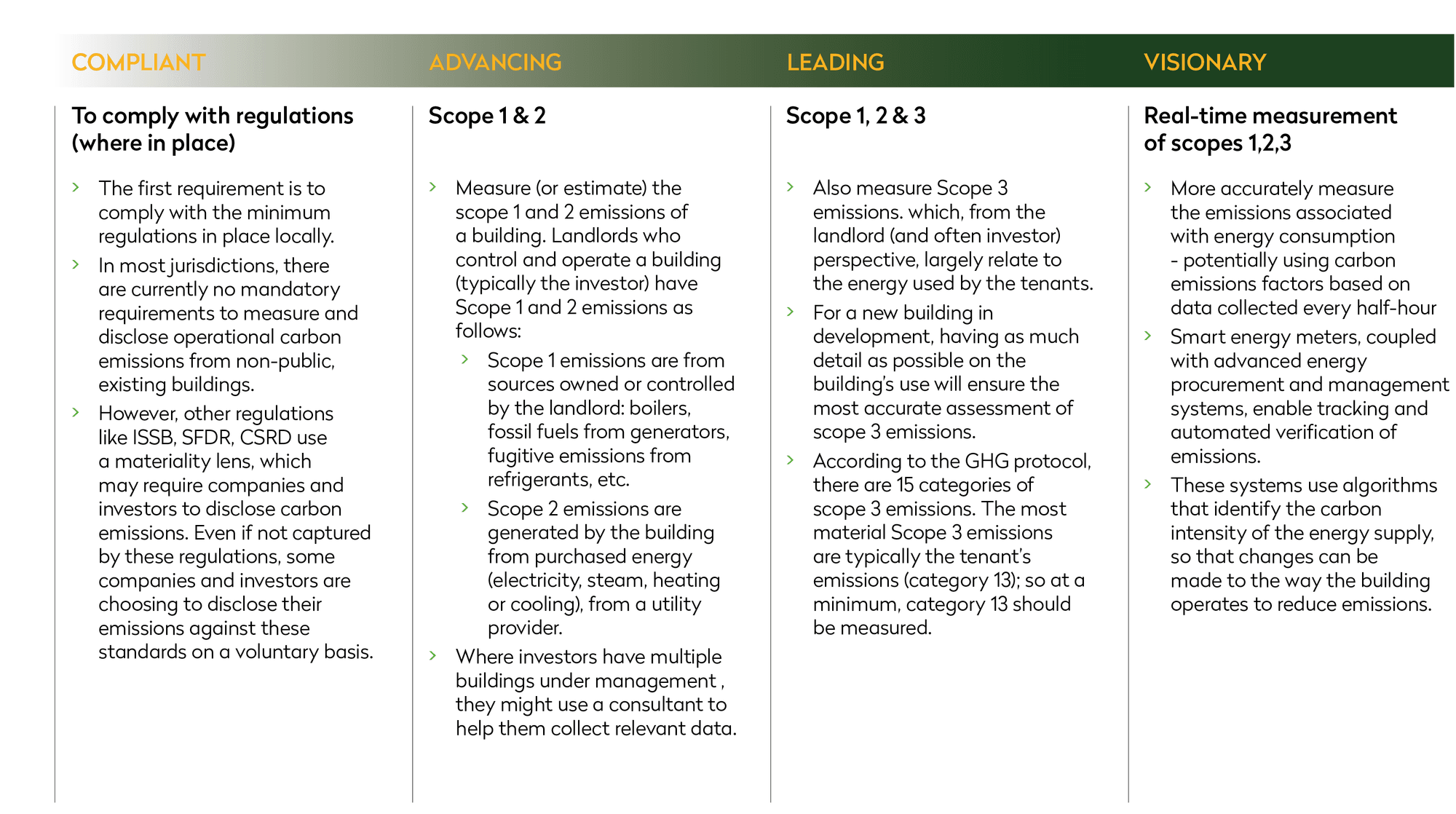
For landlords (which will often mean investors) to understand carbon emissions, the GHG Protocol requires that they collect energy data relating to all Scope 1 and 2 emissions, and the most material Scope 3 emissions for the whole building (see Appendix B; note that these Scopes are defined differently for tenants).
When a building is in use, this can be done via metered data (which, thanks to improvements in metering technology, is becoming easier all the time). However, if the building is still in the design/ development phase, investors/ landlords can still use predictive energy modelling to estimate the likely energy consumption and carbon emissions when the building is in use.
This energy consumption data can be used to calculate the energy use intensity – which in turn can be multiplied by the relevant ‘emissions factor’ to give us the building’s carbon intensity.
There are a growing number of tools and certifications that look to translate the sustainability features of buildings (including operational emissions) into ratings (e.g. BREEAM/ LEED/ DGMB etc.). But while these assessments can be an effective communication tool in the relevant jurisdiction, they all follow different methodologies. The same may also be true of regulatory certifications (e.g. Energy Performance Certificates are used widely in the UK and Europe, but the methodology varies by country). This is not helpful for global comparability.
In line with CRREM, we support the disclosure of both the energy use intensity and the carbon intensity of a building. Both of these can be benchmarked against Science-Based Targets, enabling investors to compare performance across a portfolio or multiple portfolios.