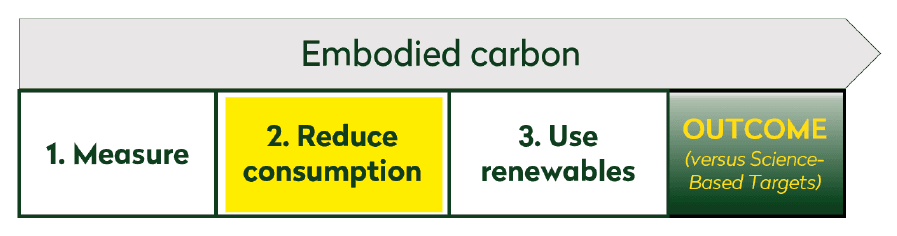
2. Reduce consumption (Embodied Carbon)
The second stage of the process is to reduce the carbon emitted via the activities measured in step 1. There are various activities that can facilitate this, both in the production, design, and supply of the building materials used, and in the on-site construction process itself.
PRODUCTION AND DESIGN
Reducing the emissions associated with raw material extraction and supply, transportation and manufacturing may involve:
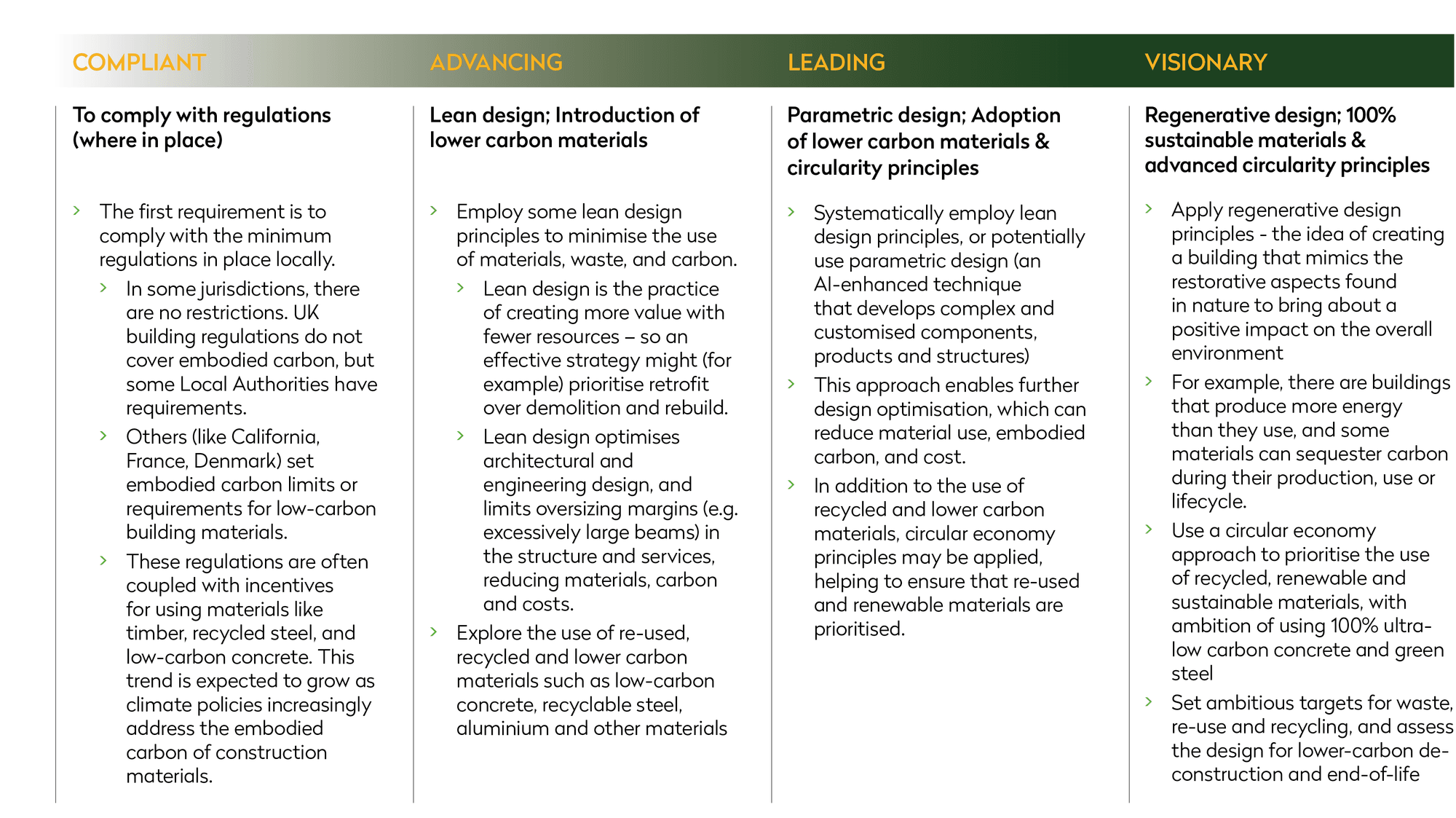
Minimising material use, by reducing the amount of materials and designing efficiently
Using recycled materials that have been processed from waste products or previously used items to create new products, reducing the need for virgin resources (e.g. recycled steel, aggregates, glass, plastic, aluminium, etc.)
Using renewable materials that have been sourced from resources that naturally replenish over a short timescale (e.g. months to decades), making them inherently renewable, e.g. wood from responsibly managed forests, bamboo, cotton, cellulose
Using sustainable materials that are produced, used, and disposed of in a way that meets present needs without compromising the ability of future generations to meet their own needs, e.g. bioplastics (from renewable sources), materials with lifecycle certifications (e.g. cradle to cradle)
CONSTRUCTION, TRANSPORT AND INSTALLATION PROCESSES
Efforts to reduce the carbon emitted through demolition, refurbishment, construction activities, and waste treatment and disposal may include:
Retrofitting, rather than demolishing and re-building
Using lean design and lean construction principles
Using prefabrication and modular construction
Sourcing local materials to shorten supply chains and reduce transportation